
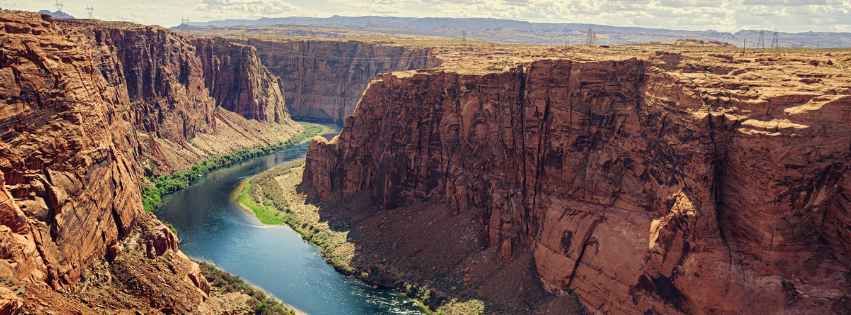
The Colorado River has long been considered the lifeblood of the American Southwest. Flowing approximately 1,450 miles from the Rocky Mountains of Colorado to Mexico, it provides water for around 40 million people, irrigates nearly five million acres of farmland, supports tribal communities, powers hydroelectric dams, and sustains one of the most economically productive regions in North America.
Today, however, the river faces one of the most significant water crises in its history. Decades of rapid population growth, expanding economies, prolonged drought, and a warming climate have placed unprecedented pressure on a river system that was already fully allocated. The result is a growing imbalance between water supply and demand that threatens cities, agriculture, ecosystems, recreation, and energy production across the Southwest.
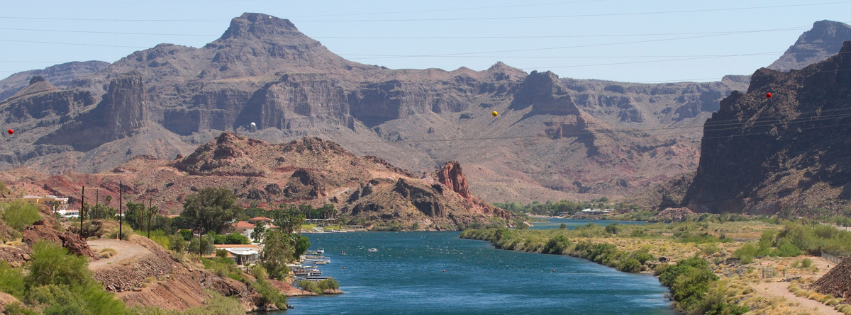
A River Supporting a Growing Population
When the Colorado River Compact was signed in 1922, the basin’s population was relatively small. Today, major metropolitan areas—including Phoenix, Las Vegas, Denver, Los Angeles, San Diego, and Salt Lake City—have experienced extraordinary growth. Millions of new residents require drinking water, sanitation services, and infrastructure, all of which increase demand for Colorado River water.
Population growth has also fueled suburban expansion, landscaping, industrial development, and municipal water consumption. While many cities have improved water-use efficiency through conservation measures and recycling programs, total demand has continued to rise because there are simply more people relying on the river.
Research from the University of Colorado has found that population growth alone may have an even greater effect on future per-capita water availability than moderate climate change scenarios, highlighting the importance of managing demand alongside improving water efficiency.
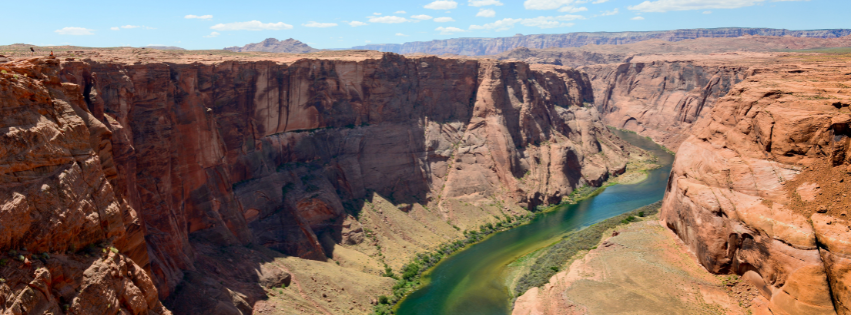
Economic Growth and Agricultural Demand
Economic development throughout the Southwest has transformed the Colorado River into an engine of regional prosperity. The river supports tourism, manufacturing, technology industries, and energy production while also sustaining one of America’s most productive agricultural regions.
Agriculture accounts for roughly 70–80 percent of the Colorado River’s water use. Farmers grow crops such as alfalfa, lettuce, cotton, citrus fruits, and vegetables that supply markets across the United States and internationally. Although agriculture is essential for food production and rural economies, irrigation places enormous pressure on limited water supplies.
As cities continue to expand, competition between urban and agricultural users has intensified. Water managers increasingly face difficult decisions about balancing municipal growth, food production, environmental protection, and tribal water rights.
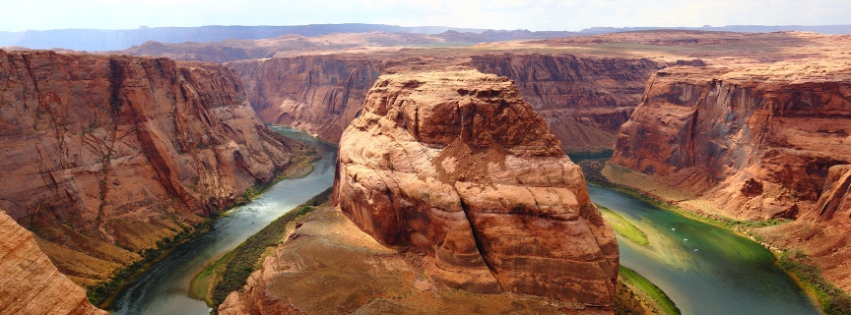
Climate Change Is Reducing Water Supply
While demand has steadily increased, climate change has reduced the amount of water entering the Colorado River system.
Scientists have found that warmer temperatures reduce mountain snowpack, accelerate snowmelt, increase evaporation from reservoirs, and dry out soils before runoff reaches rivers. Even in years with average precipitation, higher temperatures often result in less water flowing into the Colorado River.
Studies estimate that the river’s average flow has declined substantially since 2000, with rising temperatures responsible for a significant portion of that reduction. Climate projections indicate that continued warming could reduce future river flows even further if greenhouse gas emissions remain high.
The Impact of Prolonged Drought
The Southwest has experienced what many scientists describe as a “megadrought” during the 21st century. This prolonged period of below-average precipitation, combined with higher temperatures, has dramatically lowered water levels in the Colorado River’s largest reservoirs.
Lake Mead and Lake Powell, the nation’s two largest reservoirs, have reached historically low storage levels multiple times over the past two decades. These reservoirs serve as the primary water storage system for the Colorado River Basin and help regulate water deliveries throughout the Southwest.
According to the U.S. Geological Survey, storage in these reservoirs declined by more than 33 million acre-feet between 2000 and 2023. Experts estimate that several consecutive unusually wet years would be needed simply to restore previous storage levels if water use remained unchanged—an increasingly unlikely scenario in a warming climate.
Looking Ahead
The Colorado River has supported the growth of the American Southwest for more than a century, but its future will depend on adapting to a new reality. Population growth, economic development, climate change, and persistent drought have fundamentally altered the balance between water supply and demand.
The crisis is not simply the result of one dry year or one policy decision. Rather, it reflects decades of increasing demand colliding with a shrinking and more variable water supply. While conservation, innovation, and collaborative management offer hope, long-term success will require sustained commitment from governments, businesses, farmers, tribal communities, and individual residents alike.
Protecting the Colorado River is ultimately about protecting the people, economies, and ecosystems that depend upon one of North America’s most important rivers.
Searching for Solutions
Due to the seriousness of the crisis, significant efforts are underway to improve the long-term sustainability of the Colorado River.
Potential Solutions and Suggested Action Items Include:
- Considering having smaller families. Average individual water consumption is about 150 gallons per day.
- Eliminating and down-sizing more data centers and other water-intensive industries.
Refer to UPEC blog of July 20, 2026 https://utahpopulation.org/blog/the-hidden-cost-of-the-cloud-how-data-centers-are-reshaping-communities-and-ecosystems
- Consuming less meat, especially, beef. This would decrease the need for feed stock, especially alfalfa which is water intensive. Refer to UPEC blog of July 8, 2026. https://utahpopulation.org/blog/are-there-too-many-humans-or-too-many-cows
- Expanding municipal water conservation programs.
- Investing in wastewater recycling and water reuse.
- Improving agricultural irrigation efficiency.
- Encouraging drought-tolerant landscaping (Xeriscaping).
- Negotiating updated water-sharing agreements among the seven basin states, Tribal Nations, and Mexico.
- Incorporating climate science into long-term water management.
- Restoring river ecosystems where possible.
The challenge is considerable because the Colorado River is governed by a complex system of interstate agreements, federal laws, tribal rights, international treaties, and environmental regulations. Cooperation among all stakeholders will be essential as existing operating agreements continue to evolve.
ChatGPT AI used in the generation of this Blog
AI Sources and References
U.S. Geological Survey. The Colorado River Water Crisis: Its Origin and the Future. 2023. https://www.usgs.gov/publications/colorado-river-water-crisis-its-origin-and-future
U.S. Geological Survey. Colorado River Basin. 2026. https://www.usgs.gov/publications/colorado-river-basin-0
U.S. Geological Survey. Rising Temperatures Impact Colorado River Resources. https://www.usgs.gov/programs/climate-adaptation-science-centers/rising-temperatures-impact-colorado-river-resources
University of Colorado Boulder. Population Growth and Climate Change: Increasing Pressure on the Colorado River. https://www.colorado.edu/program/hydrosciences/2018/08/21/population-growth-and-climate-change-increasing-pressure-colorado-river
U.S. Bureau of Reclamation. Colorado River Basin Operations. https://www.usbr.gov/ColoradoRiverBasin/post2026/index.html
The Nature Conservancy. The Colorado River Is in Crisis. https://www.nature.org/en-us/about-us/where-we-work/priority-landscapes/colorado-river/colorado-river-in-crisis/
Associated Press. As Lake Powell Shrinks, Marinas Are Having to Adapt to Dwindling Water Levels.