

Every search query, streaming session, and AI-generated image passes through a data center somewhere — a warehouse of servers that, to most of us, is invisible. But for the people who live near these facilities, and for the ecosystems surrounding them, data centers are anything but invisible. As the AI boom drives an unprecedented wave of construction, a small but growing body of academic research is documenting the environmental and public health costs that come with this infrastructure: strained water supplies, degraded air quality, chronic noise, and disproportionate burdens on already vulnerable communities.
A Public Health Blind Spot We’re Only Now Filling
For years, data centers were treated as a purely economic and technological story — jobs, tax revenue, digital progress. Public health researchers are now pushing back on that framing. A 2025 review published in Frontiers in Public Health examined the rapid buildout of data centers in Virginia, the world’s largest data center market, and concluded that large-scale land conversion for these facilities alters local ecosystems and built environments in ways that indirectly affect health through loss of green space, increased heat exposure, air pollution, and psychosocial stress. Critically, the researchers found these effects to be cumulative and long-term, falling disproportionately on rural and historically marginalized communities rather than being spread evenly across a region. [1]
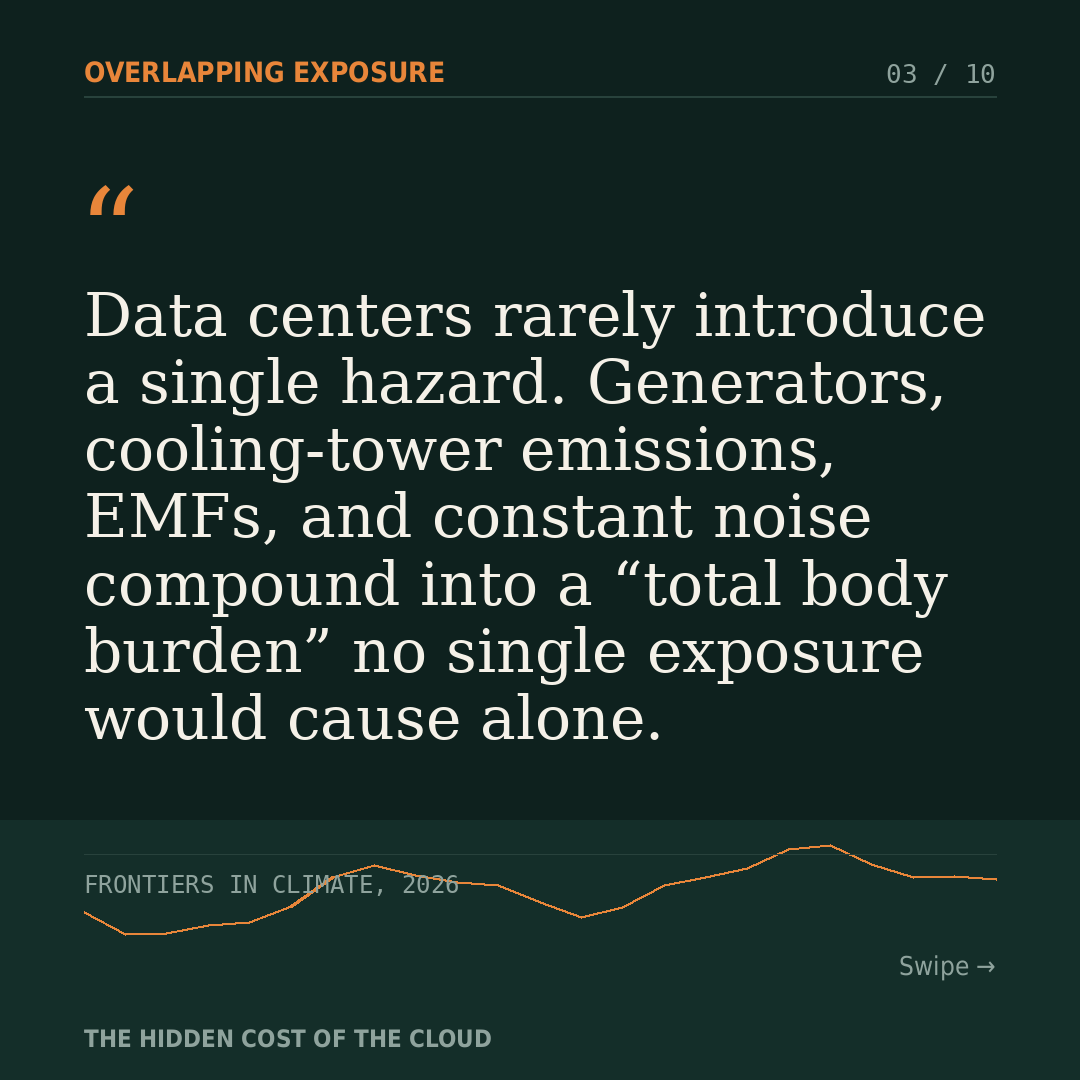
This is a recurring theme in the literature: data centers rarely introduce a single, easily measured hazard. Instead, nearby residents face overlapping exposures — diesel backup generators, cooling-tower emissions, electromagnetic fields, and continuous operational noise — that compound one another. A companion analysis from Environmental Health Sciences researchers makes a similar point, noting that communities near hyperscale facilities can experience simultaneous exposure to air emissions, water pollution, noise, and power-infrastructure effects, and that this “total body burden” of overlapping stressors can produce health effects beyond what any single exposure would cause on its own. [1]
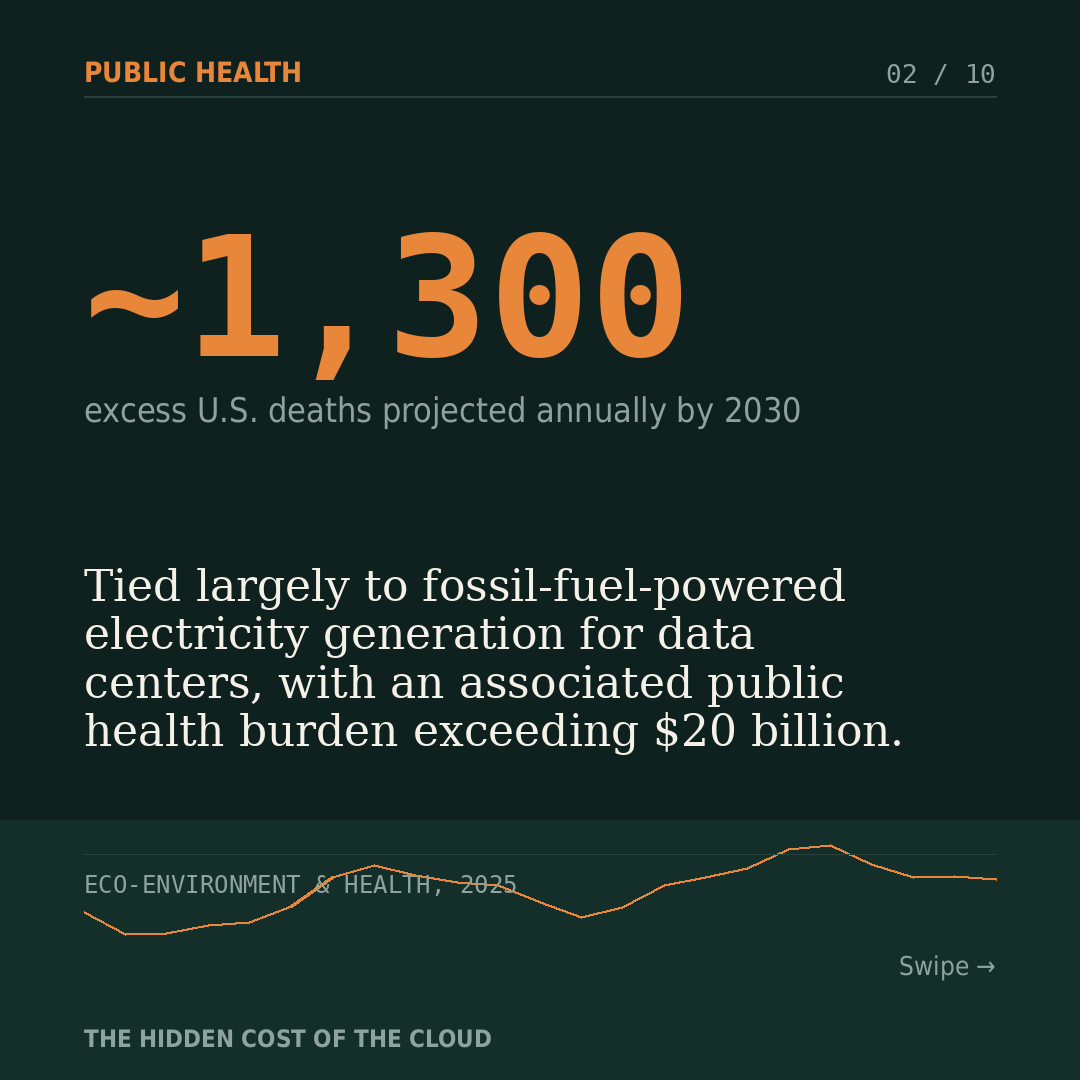
A 2025 commentary in a peer-reviewed public health journal went further, framing the global data center boom itself as an emerging public health concern. The authors cited modeling suggesting that U.S. data centers could contribute to nearly 1,300 excess deaths annually by 2030, largely tied to fossil-fuel-powered electricity generation, with an associated public health burden exceeding $20 billion. Their central argument is one of urgency: empirical research on long-term health outcomes in “host communities” is still sparse, even as the industry expands at a pace regulators are struggling to keep up with. [2]
Water: The Resource Nobody Talks About Until It Runs Short
If air quality and noise are the impacts people can hear and smell, water consumption is the impact that’s easiest to miss — because it happens behind concrete walls, in cooling systems most residents will never see. This is where some of the most rigorous quantitative research has emerged.
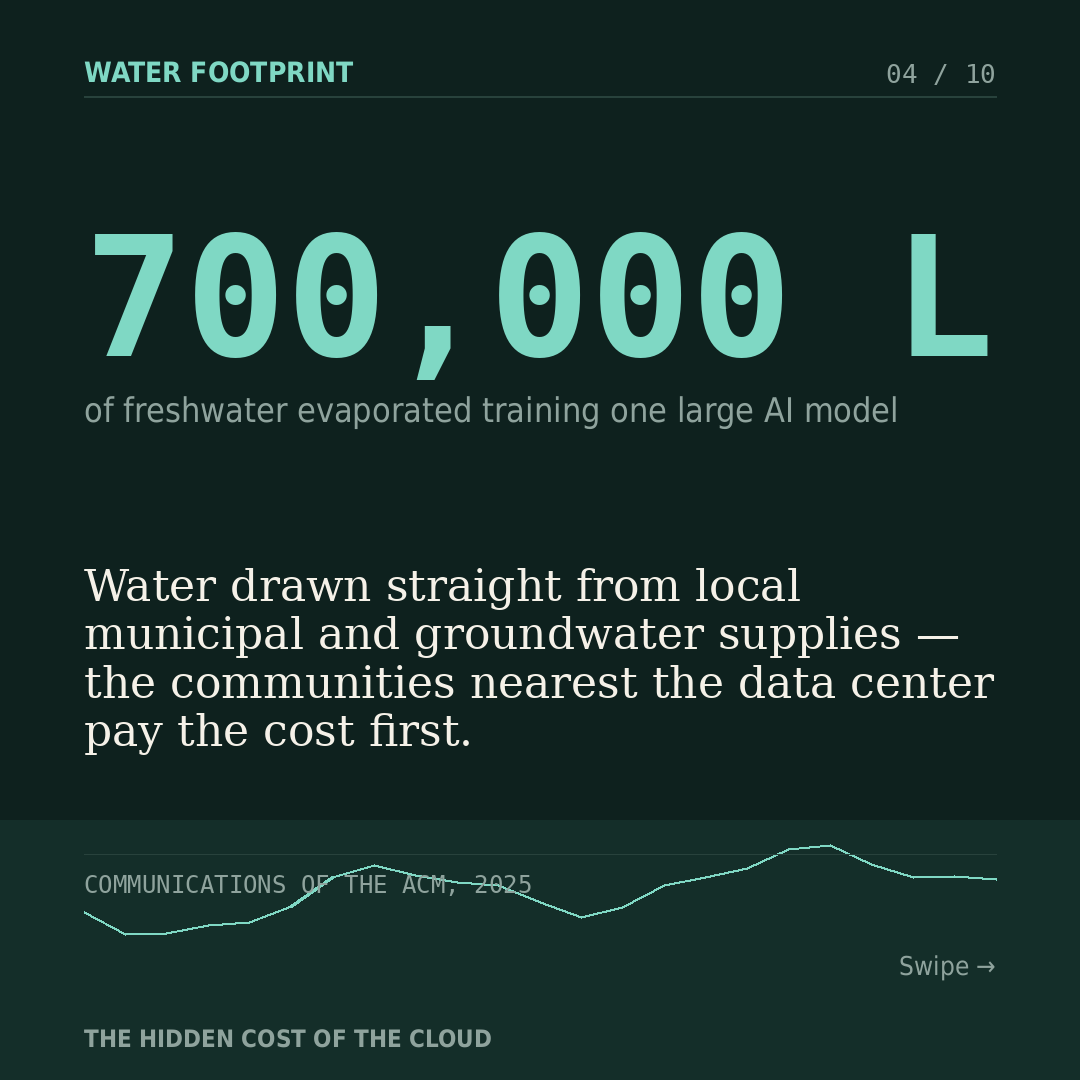
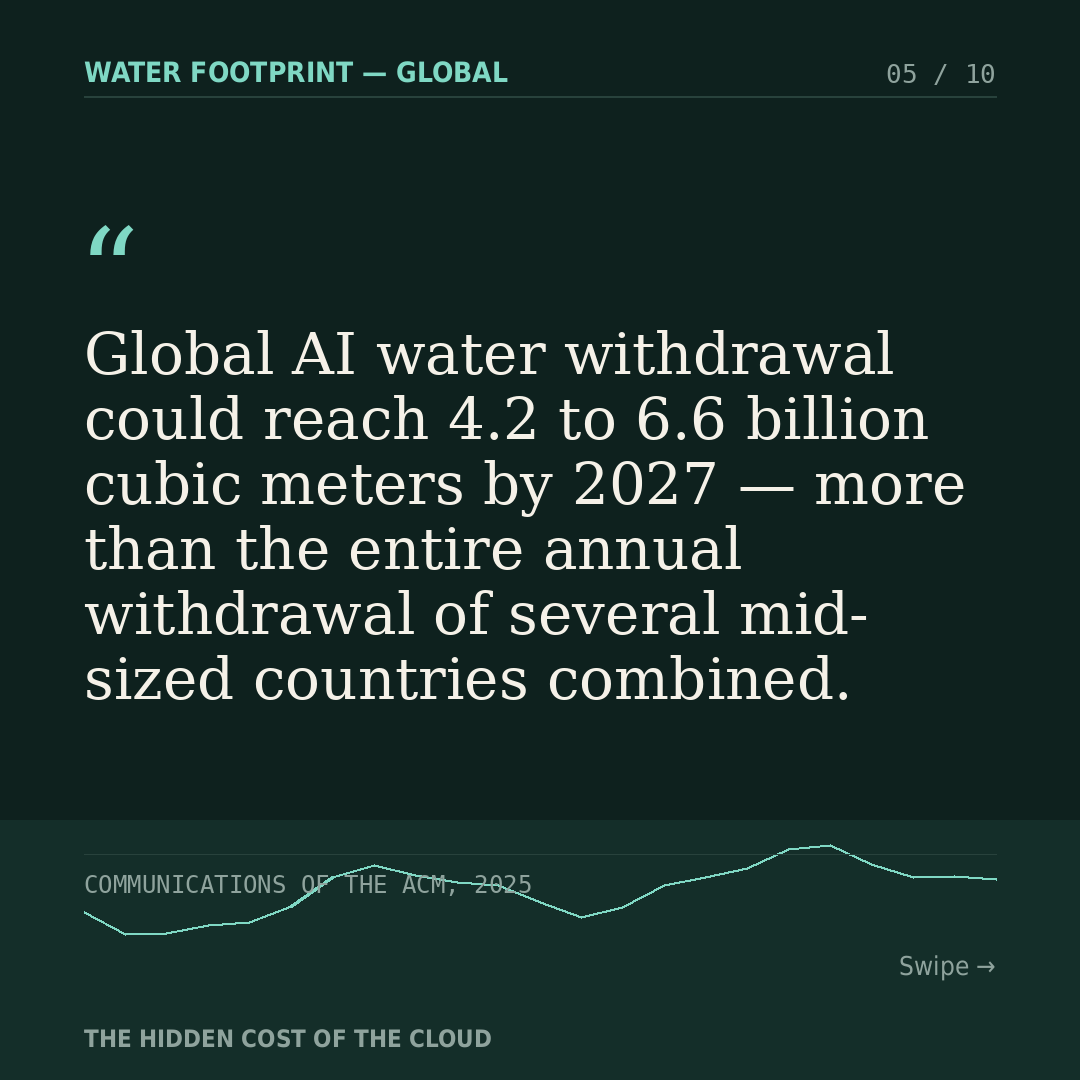
A widely cited peer-reviewed study in Communications of the ACM, led by researchers at the University of California, Riverside, quantified what the authors called AI’s “secret water footprint.” They found that training a single large language model in a state-of-the-art U.S. data center can directly evaporate hundreds of thousands of liters of clean freshwater — water that would have tripled in volume had the same training taken place in data centers located in parts of Asia with different cooling infrastructure and climates. The same research team projected that global AI water withdrawal could reach 4.2 to 6.6 billion cubic meters by 2027 — more water than the entire annual withdrawal of several mid-sized countries combined. Because this water is drawn from local municipal and groundwater supplies, the burden falls hardest on the specific watersheds and communities where facilities are sited, many of which already face drought stress or competing agricultural demand. [3]
Noise, Land Use, and the Slow Erosion of Livability
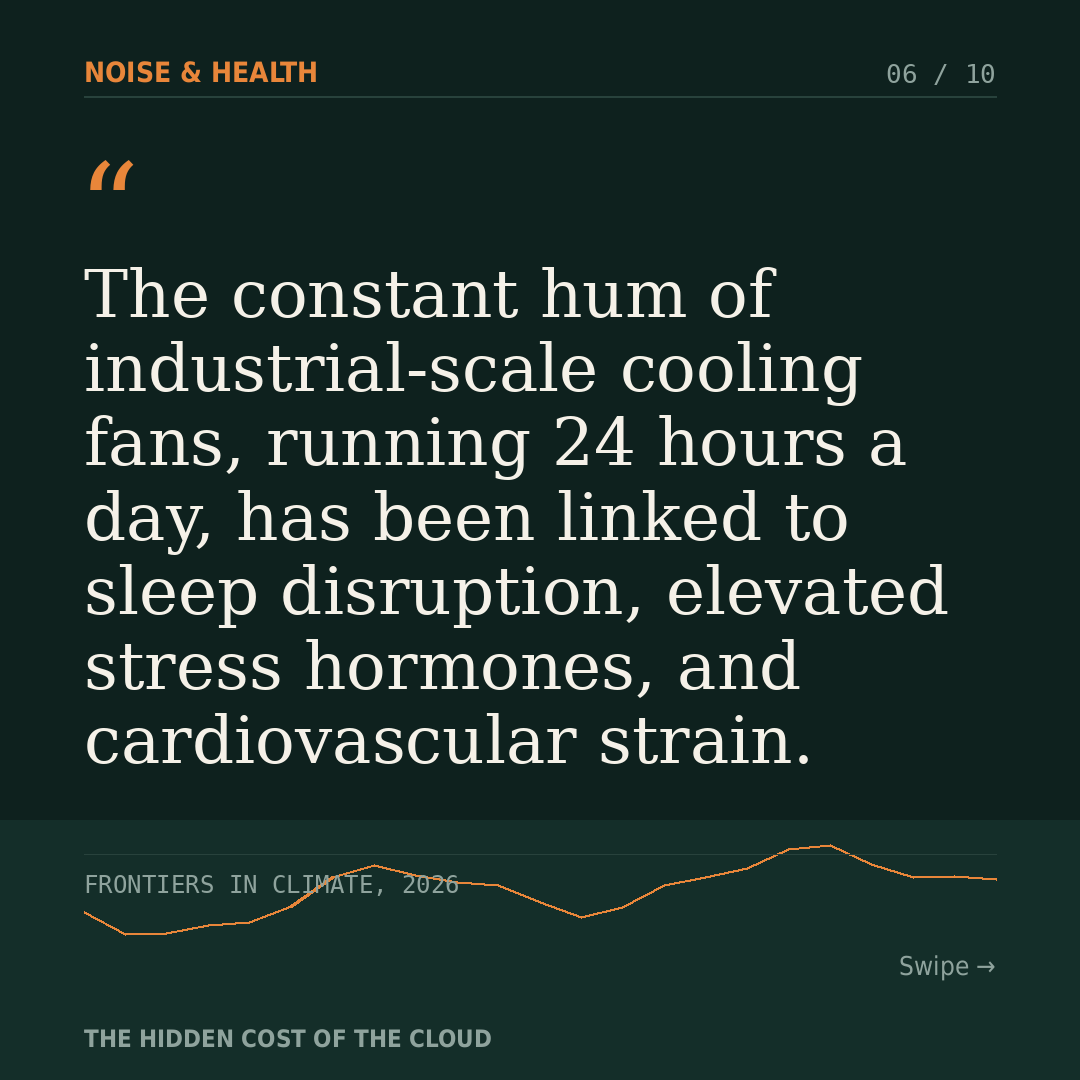
Beyond emissions and water, researchers point to a subtler but persistent form of harm: the constant hum of industrial-scale cooling fans running 24 hours a day. Public health literature on noise exposure more broadly has long linked chronic low-frequency noise to sleep disruption, elevated stress hormones, and cardiovascular strain — mechanisms that reviewers studying data centers specifically have flagged as a plausible pathway for harm in host communities, even though direct long-term studies of data-center noise are still limited. This gap is itself notable: multiple peer-reviewed reviews explicitly call out the scarcity of dedicated data-center health studies as a barrier to good policy, arguing that this absence of evidence should not be mistaken for an absence of risk. [1, 2]
Land-use change compounds these effects. Converting forests, farmland, or wetlands into server campuses removes natural heat buffers and green space precisely in communities that may already have less tree canopy and fewer environmental protections — reinforcing existing environmental justice concerns rather than creating entirely new ones. [1]
Utah’s Box Elder County: A Case Study Playing Out in Real Time
Nowhere illustrates this tension better right now than rural Box Elder County, Utah, where a fight over a single project has become a national bellwether for how communities respond when the AI infrastructure boom shows up at their doorstep.
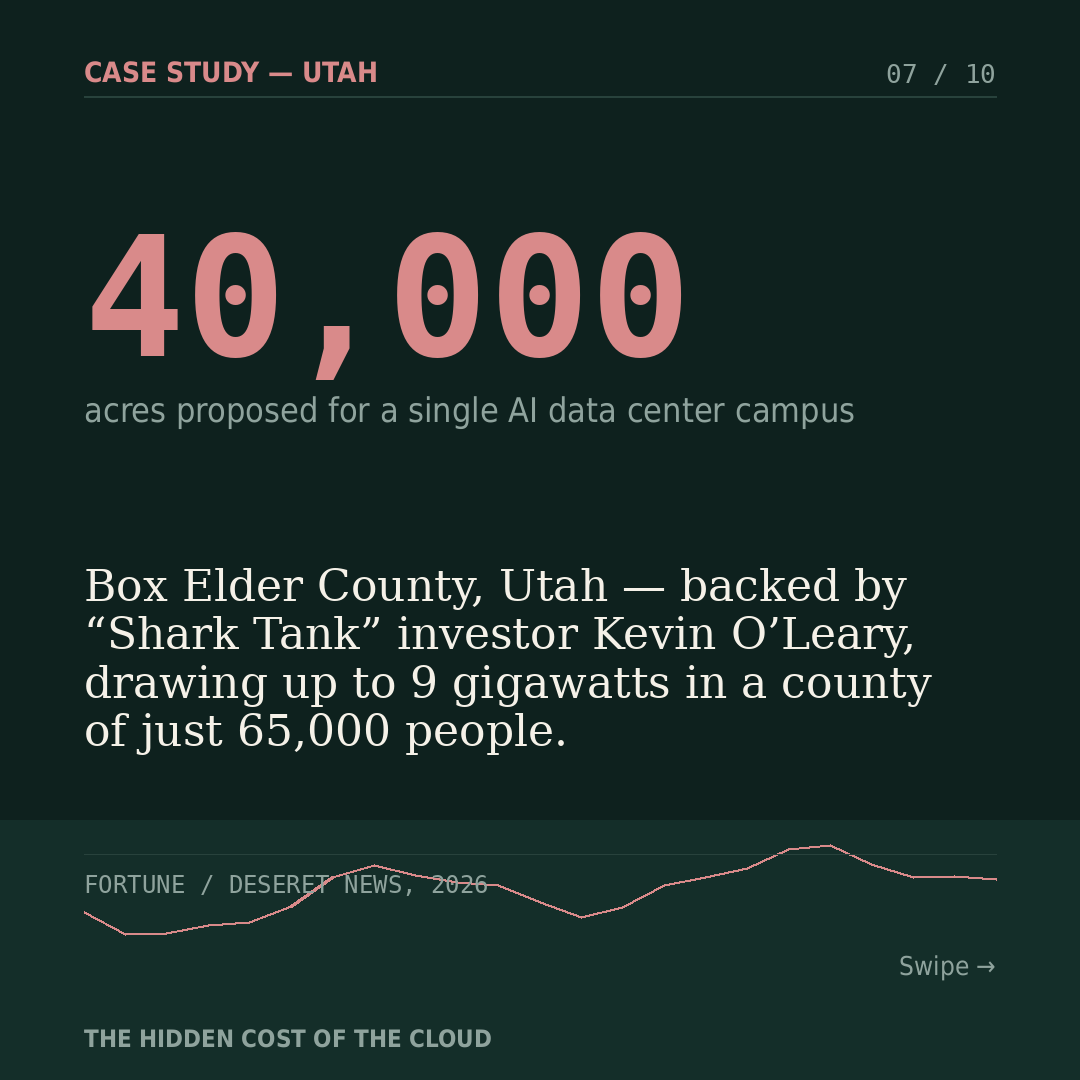
The project, known as the Stratos Project, is a proposed hyperscale data center campus spanning roughly 40,000 acres of high desert land near Snowville, close to the Great Salt Lake. It’s backed by Kevin O’Leary — the Canadian businessman known to most Americans as “Mr. Wonderful” from Shark Tank — through his company, O’Leary Digital, in partnership with Utah’s Military Installation Development Authority (MIDA), a state agency that helps the military make commercial use of its land. At full build-out, planners have discussed a facility drawing as much as 7.5 to 9 gigawatts of power, in a county of only about 65,000 residents. [5, 6]
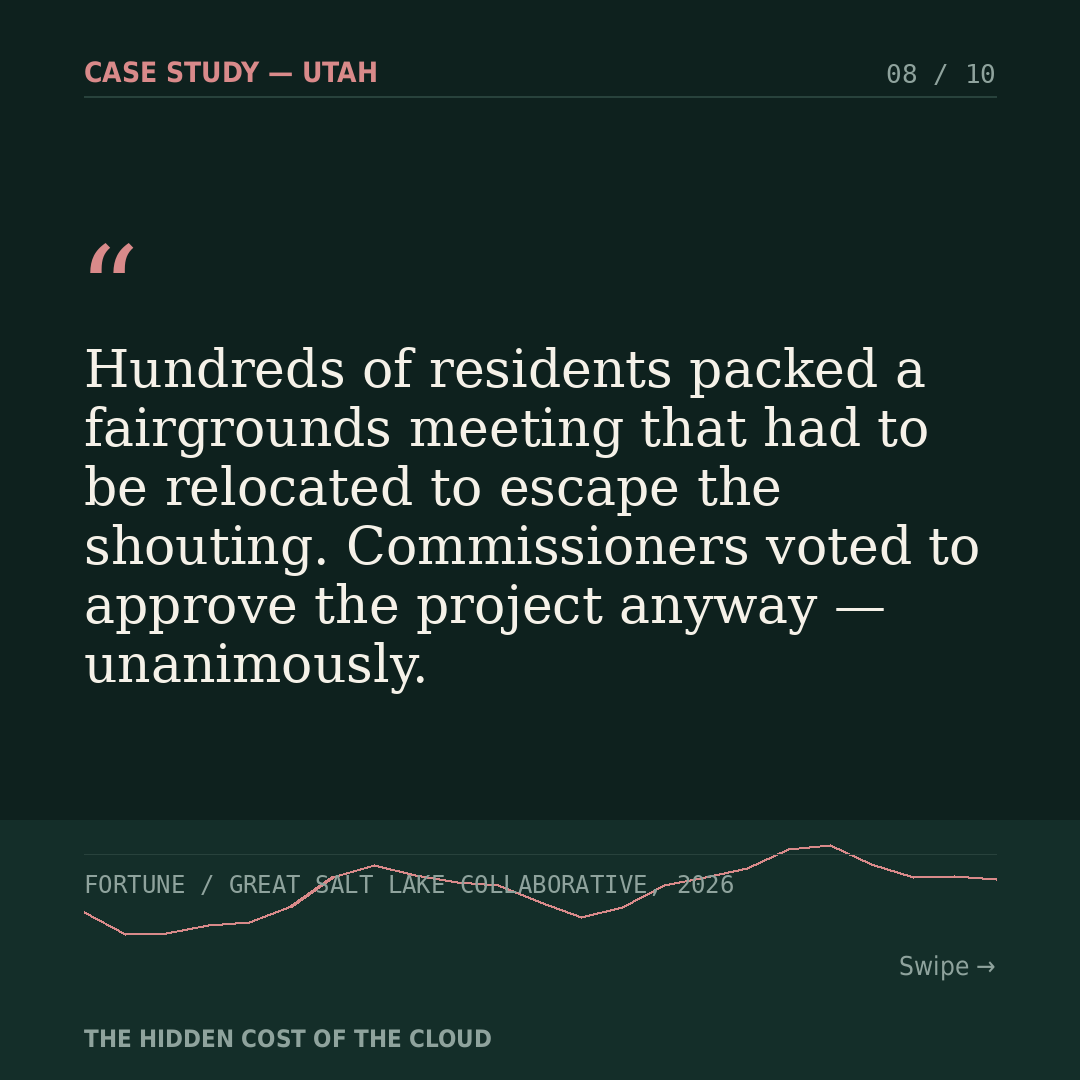
In May 2026, Box Elder County commissioners unanimously approved the resolutions needed to move the project forward, touting job creation, tax revenue, and the project’s framing as a matter of national security in the AI race with China. The vote was contentious: hundreds of residents packed a fairgrounds meeting that had to be relocated to a larger venue, and many were frustrated that public comment wasn’t taken before the vote. [5, 6, 11]
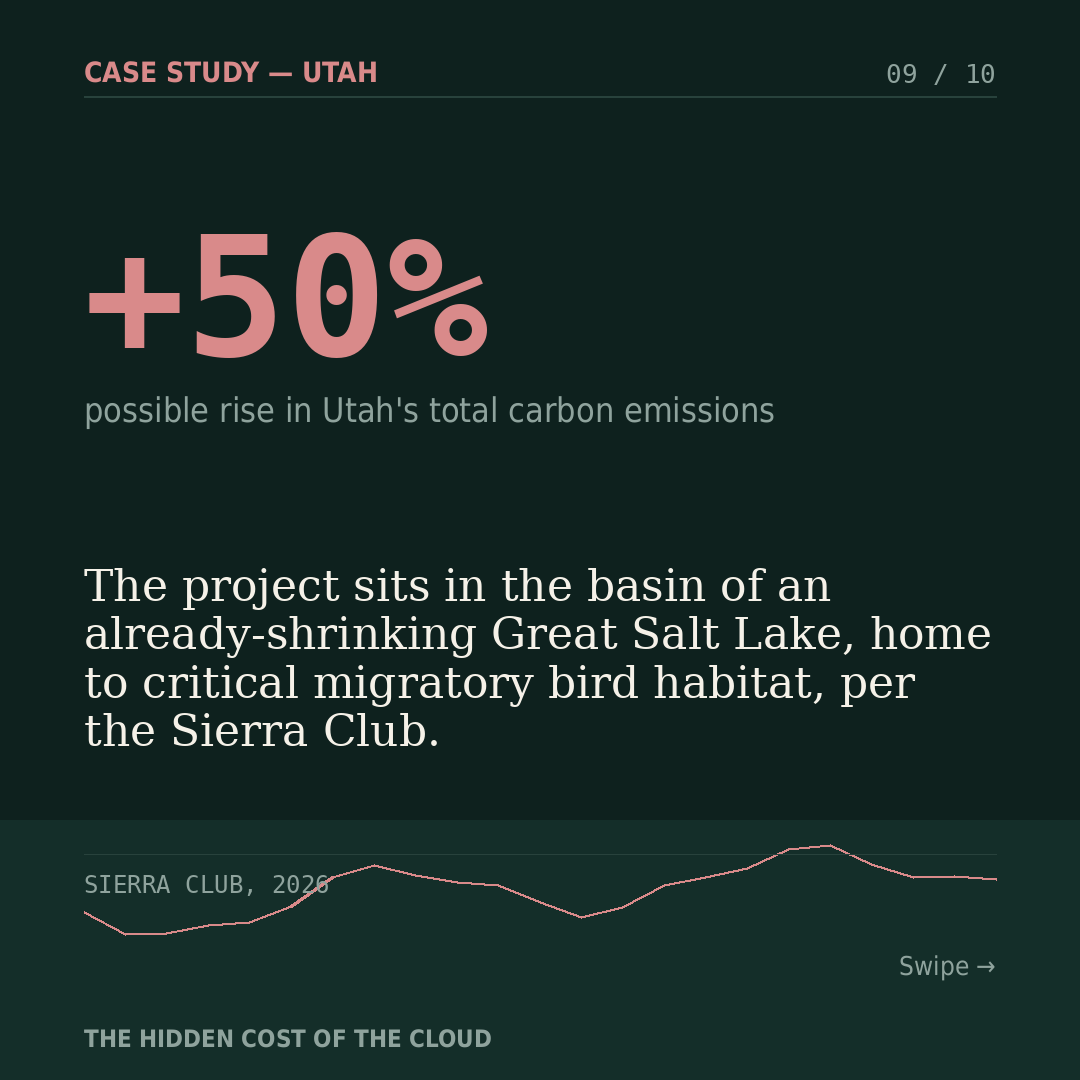
Opponents — organized under names like the Box Elder Accountability Referendum Group (BEAR) and allied with Great Salt Lake advocacy group Grow the Flow — have centered their concerns on exactly the issues this blog covers: strain on already-scarce water resources in one of the driest basins in the country, air quality impacts from backup power generation, and the loss of habitat in a region that includes critical migratory bird habitat around the shrinking Great Salt Lake. [7, 9] The Sierra Club has estimated the project could increase Utah’s total carbon emissions by as much as 50% and consume electricity equivalent to more than twice the state’s current usage. [9]
O’Leary has pushed back forcefully on the water concerns, telling reporters he hopes the project becomes a model for how to do large-scale development “right,” and his company has floated design changes such as increased air cooling to reduce water use. [10] The dispute escalated further when O’Leary publicly suggested that some project opponents might be acting as proxies for the Chinese government — an accusation local critics rejected sharply. [4]
Residents attempted to force a public referendum on the county’s approval, but in late May 2026 the county attorney determined the underlying resolutions were administrative acts not legally subject to a voter referendum, a decision organizers have contested in court. [11] Meanwhile, facing sustained political backlash — including pressure from Utah’s own Senate President — O’Leary’s team has since agreed to shrink the project’s footprint by roughly half, and a lawsuit brought by residents and a nonprofit remains pending. [8, 10, 13]
The Box Elder fight matters beyond Utah because it compresses, into a few months, nearly every tension this article describes: opaque approval processes, disputed water and air impacts, a community that feels it was presented with a done deal rather than a genuine consultation, and a developer arguing that national competitiveness in AI justifies moving fast. Whether Stratos ultimately gets built at its original scale or a much smaller one, it’s likely to shape how other rural counties across the country approach the next hyperscale proposal that lands on their agenda.
Why This Matters Going Forward
The consistent message across this research isn’t that data centers are uniquely evil pieces of infrastructure — it’s that they’ve expanded faster than the science needed to responsibly govern them. Researchers studying the Virginia buildout explicitly recommend responsible site selection, prioritizing existing industrial land over greenfield development, and genuine community engagement through public hearings rather than after-the-fact notification. The UC Riverside water research team argues for the same principle applied to water: transparency in reporting, and engineering choices (like geographic load-balancing of computing tasks) that account for local water stress rather than treating all water sources as interchangeable.
What’s clear from the academic literature is that the digital infrastructure powering our AI-driven economy has a physical footprint with real consequences for the people who happen to live nearest to it — and that the research community is only beginning to catch up to an industry that isn’t waiting for the data to arrive.
Sources
Peer-reviewed / academic sources
- Gour, N., Ortiz, L., & Maibach, E. (2026). Health implications of the rapid rise of data centers in Virginia: an exploratory assessment. Frontiers in Climate. https://www.frontiersin.org/journals/climate/articles/10.3389/fclim.2026.1648912/full
- Tao, Y., & Gao, P. (2025). Global data center expansion and human health: A call for empirical research. Eco-Environment & Health, 4(3), 100157. https://pmc.ncbi.nlm.nih.gov/articles/PMC12273412/
- Li, P., Yang, J., Islam, M. A., & Ren, S. (2025). Making AI Less “Thirsty”: Uncovering and Addressing the Secret Water Footprint of AI Models. Communications of the ACM, 68, 54–63. https://arxiv.org/abs/2304.03271
News and organizational sources on Box Elder County, Utah
- Slate (2026, June 1). Artificial intelligence: Why Shark Tank’s Kevin O’Leary wants to build a massive data center in Utah. https://slate.com/technology/2026/06/artificial-intelligence-kevin-oleary-utah-data-center.html
- Fortune (2026, May 11). Shark Tank’s Kevin O’Leary wants to build a massive $100 billion data center in rural Utah. Residents are revolting. https://fortune.com/2026/05/11/shark-tank-kevin-oleary-millionaire-utah-data-center-american-politics-protests-ai-tech/
- Deseret News (2026, May 12). Everything about Utah’s Stratos Project data center. https://www.deseret.com/utah/2026/05/12/everything-about-utah-stratos-project-data-center/
- Utah News Dispatch (2026, May 14). A Box Elder County group wants voters there to decide proposed data center’s fate. https://utahnewsdispatch.com/2026/05/14/box-elder-county-group-wants-referendum-on-proposed-data-center/
- The Christian Science Monitor (2026, June 5). In Utah, growing pushback over a city-sized data center. https://www.csmonitor.com/Environment/2026/0605/utah-stratos-data-center-kevin-oleary
- Sierra Club (2026, May 6). Stratos Data Center Approval Threatens Great Salt Lake Basin (press release). https://www.sierraclub.org/press-releases/2026/05/stratos-data-center-approval-threatens-great-salt-lake-basin
- KSL.com (2026, June 4). Kevin O’Leary agrees to dramatically cut Box Elder County data center project area. https://www.ksl.com/article/51506884/kevin-oleary-agrees-to-cut-box-elder-county-data-center-project-area-in-half
- Great Salt Lake Collaborative / Utah News Dispatch (2026, June 5). Trying to get the Stratos data center on the ballot, locals are now appealing to a judge. https://greatsaltlakenews.org/latest-news/utah-news-dispatch/trying-to-get-the-stratos-data-center-on-the-ballot-locals-are-now-appealing-to-a-judge
- Cache Valley Daily (2026, May 21). New Box Elder data center protest slated for May 23 on State Capitol steps in Salt Lake City. https://www.cachevalleydaily.com/news/new-box-elder-data-center-protest-slated-for-may-23-on-state-capitol-steps-in/article_efdf8088-cf9b-4dd3-bda2-f65145ac49b3.html
- NBC News (2026, June 6). Utah residents sue officials over Kevin O’Leary data center plan. https://www.nbcnews.com/tech/tech-news/utah-residents-sue-officials-kevin-oleary-data-center-plan-rcna348720