
A recent article in the Lancet medical journal has been getting a lot of press for predicting that the global population will decline sooner than most experts predict — at 9.7 billion in 2064. But a) that’s still way too many people for this roasting planet and b) the authors are more optimistic about improvements in women’s education and access to birth control than many other demographers. You can read an excellent summary of the new study and the broader debates surrounding it, including some comments by UPEC’s own Derek Hoff.
Indonesia’s New Coronavirus Concern: A Post-Pandemic Baby Boom
With restrictions in place, millions stopped visiting clinics for contraceptives, says the government, which promotes family planning as part of its fight against child malnutrition…
The pandemic could lead to a ‘baby bust’ of almost half a million fewer births, a major think tank
projectsinsider@insider.com (Juliana Kaplan)
Brookings Institute economists predict that the coronavirus pandemic will lead to what they call a “baby bust” — not a baby boom…
Stephen C. Bannister: Our Faustian bargain with fossil fuels
By Stephen C. Bannister | Special to The Tribune · Published: 5 days ago
Updated: 5 days ago
Most of us have enjoyed the much cleaner air since the great COVID-19 shutdown-caused economic collapse. Everything damaging that we normally dump into our common airshed is reduced — carbon dioxide that increases climate warming and the pollutant precursors that cause regional haze we notice as bad air quality and bad health outcomes — and the result has been cleaner air for all to enjoy.
But this win has been accompanied by considerable social and commercial costs. The pandemic has sharply curtailed personal and business activities, causing lost incomes across the economy and damaging the poorest parts of society and business most heavily.
Utah Population Keeps Growing but Slows in 2025
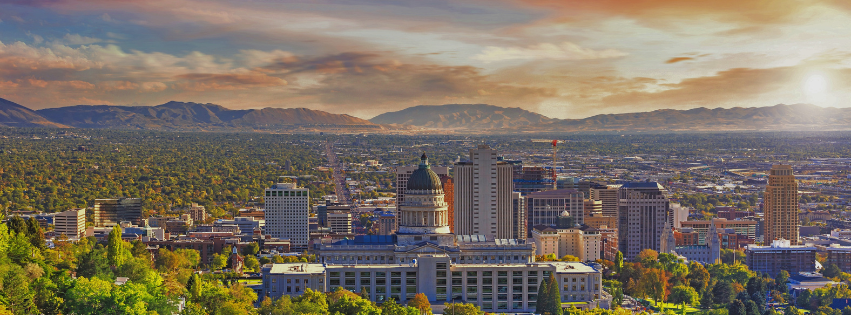
Recently there have been updates on the demographics of Utah for 2025
and projections for the future. The updates are provided at the
following two websites:
Utah’s population growth is slowing down. Here’s how it compares with
other states | KSL.com by Carter Williams, Jan. 27, 2026. Discussing a
recent U.S. Census Bureau report
Utah 2065: Long-Term Planning Projection (Vintage 2025) – Kem C.
Gardner Policy Institute Nov. 2025
The following provides a few of the key findings with some comparisons
to previous population numbers.
Utah gained nearly 36,000 new residents between July 1, 2024, and July
1, 2025, representing a growth rate of 1%, according to U.S. Census
Bureau data released on Jan. 27, 2026. That’s nearly a full percentage
point below its growth rate in 2024, but still strong enough to remain
one of the five fastest-growing states in the country.” (In 2024 Utah
added 50,392 residents. Policy Brief February 2025 State and County
Population Estimates for Utah: 2024 Authored by Emily Harris, Senior
Demographer, Kem C. Gardner Policy Institute.)
As the KSL article states “What Utah is experiencing is not all that
different from what other states are experiencing. The entire U.S.
population grew by 0.5% last year, a half-percentage point behind the
previous year.”
“With births and deaths remaining relatively stable compared to the
prior year, the sharp decline in net international migration is the main
reason for the slower growth rate we see today,” said Christine Hartley,
assistant division chief for estimates and projections for the Census
Bureau.
For the United States, federal demographers reported, “Net
international migration plummeted from 2.7 million in 2024 to 1.3
million in 2025, and it’s expected to drop to approximately 321,000 in
2026.” If the trend persists “the U.S. may reach negative net migration
for the first time in over 50 years.” (New Population Estimates Show
Historic Decline in Net International Migration, Population Estimates
Program Staff, U.S. Census Bureau, January 27, 2026.)
“Last year was the first time since the COVID-19 pandemic that net
migration didn’t surpass natural growth. Rising housing costs could be a
factor in the growth “moderation” that Utah is experiencing, as could
other factors leading to fewer people moving in, state experts
explained.” (From KSL Report)
The report from the Kem C. Gardner Policy Institute at the University of
Utah in Nov. 2025 provides a wealth of population data and projections
for the future. Their long-term planning projections indicate the state’s
population “will increase from nearly 3.6 million residents to 5.6 million
by 2065, an increase of 2 million people, or the approximate size of
Idaho today.”
The Feb. 27 UPEC blog on the Great Salt Lake discusses many of the
challenges that face the Great Salt Lake. If the Great Salt Lake becomes
an increasingly harmful environmental concern, this could decrease the
future growth in Utah.
In Summary: Utah is still growing rapidly, but there has been a recent
decline in population growth. Variables such as the current decrease in
international migration and components such as housing costs and the
health of the Great Salt Lake will help determine Utah’s growth in the
future.
Due to numerous factors, the Utah Population and Environment Council
encourages decreasing population growth in Utah. But not at the cost of
people’s lives and welfare. A future blog will further explore the
broader issues relating to the decrease in international migration.
The Lifeline We Cannot Afford to Lose: How Great Salt Lake Sustains Our Community’s Health and Future
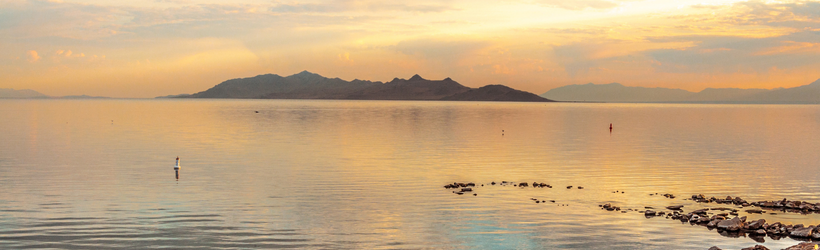
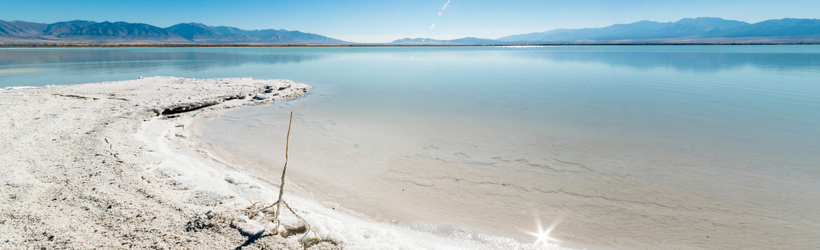
The Great Salt Lake isn’t just a scenic backdrop to Utah’s Wasatch Front—it’s the lifeblood of our community’s health, economy, and very survival. Yet this vital resource is disappearing before our eyes, and with it, the foundation of a sustainable population and thriving communities across Northern Utah.
The science is unequivocal: preserving Great Salt Lake is not an environmental issue separate from human wellbeing—it is a public health imperative, an economic necessity, and a matter of environmental justice.
The Direct Threat to Public Health
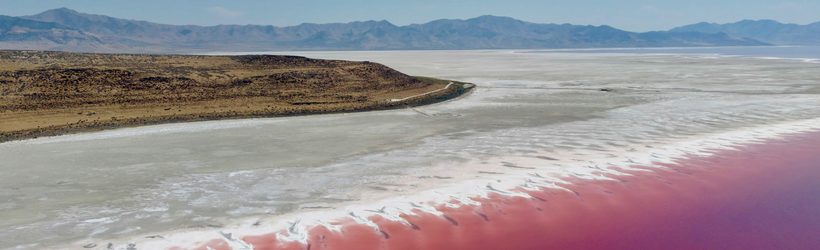
When Great Salt Lake shrinks to unusally low levels, it exposes thousands of acres of lakebed containing not just salt, but heavy metals like arsenic, mercury, and lead—legacy pollutants from decades of mining, agriculture, and industrial discharge. This toxic dust doesn’t stay put.
Dr. Courtney Henley, a physician and board member of Utah Physicians for a Healthy Environment, describes the scope of this threat: “The medical urgency arises from the pervasive nature of the threat. All living beings will inhale blowing lakebed dust, and every human resident in the path of blowing dust is impacted.”
The U.S. Geological Survey has confirmed that this isn’t hypothetical—it’s happening now. Recent USGS research shows that dust from the dry Great Salt Lake lakebed contributes to potential health risks, particularly for children in Northern Utah communities. Children are especially vulnerable due to their smaller body sizes and greater rates of dust ingestion, with exposure to heavy metals during early years potentially leading to developmental issues and long-term health problems.
The reality is stark: 2.5 million Utahns live downwind of the exposed lakebed. Every dust storm carries toxins into our lungs, our homes, and our children’s schools.
An Environmental Justice Crisis
The burden of the shrinking lake falls disproportionately on communities of color. Research published in the journal One Earth by University of Utah sociologist Sara Grineski and colleagues reveals a disturbing pattern: Pacific Islander and Hispanic residents living in northwestern parts of Salt Lake City suffer some of the worst dust pollution from the drying Great Salt Lake, and these communities also had the most to gain from restoring lake levels.
This disparity isn’t accidental—it’s the result of historical redlining that pushed many people of color into western, more industrialized neighborhoods. Now, as the lake dries, these same communities face the highest exposure to toxic dust.
But here’s the encouraging finding: Grineski’s research shows that raising lake levels would reduce dust exposure for everyone while narrowing the exposure gap between communities. As she notes, restoring the lake is “definitely a win-win.”
The Economic Cost of Inaction
The economic case for preserving Great Salt Lake is overwhelming. According to recent economic research by Dr. Albert Garcia at the University of Utah, Great Salt Lake dust is currently costing the local economy approximately $30 million annually. But that’s just the beginning. Over the next 20 years, negative health outcomes and premature deaths could set the Salt Lake area community back one billion dollars.
The broader economic impacts are even more staggering. Studies cited by scholars at the University of Utah’s Stegner Center project that economic losses from a declining lake could reach $25.4 billion to $32.6 billion over 20 years, with more than 6,500 jobs lost.
This isn’t abstract economic theory—it’s about real families, real livelihoods, and real communities. The lake directly supports over 7,700 jobs and contributes $1.9 billion annually to Utah’s economy through mineral extraction, brine shrimp harvesting, and recreation. But the ripple effects extend much further.
The Snow Connection: More Than Recreation
Great Salt Lake plays a surprising but crucial role in Utah’s famous powder snow. The lake contributes 5-10% to Utah’s snowpack and extends the ski season by 5 to 7 weeks. This isn’t just about recreation—Utah’s ski industry includes 20,000 jobs and contributes $1.2 billion each year to the state’s economy.
But there’s a more fundamental concern: as dust from the exposed lakebed settles on mountain snowpack, it causes snow to melt earlier, threatening the water supplies that our entire region depends on. A healthy lake means healthy snowpack, which means sustainable water resources for our growing population.
Learning from the Fate of Other Lakes
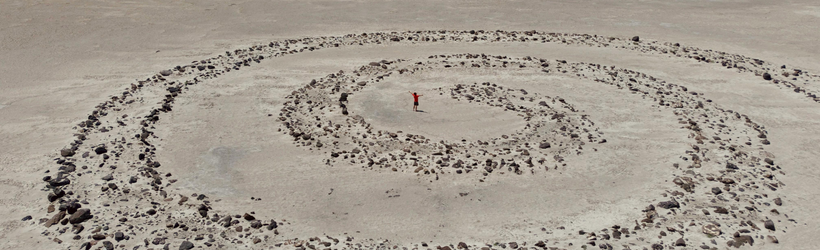
Utah doesn’t have to guess what happens when terminal saline lakes dry up—we can look at cautionary tales around the world. California’s Owens Lake dried up by 1926 after its water was diverted to Los Angeles. Today, it’s one of the single largest sources of PM10 particulate matter pollution in the United States, presenting major health concerns for 40,000 people in Owens Valley. Los Angeles County has spent over $2.5 billion trying to combat dust storms from the dried lakebed.
Dr. Henley warns of the parallel to our situation: “If Great Salt Lake dries up, the cities along the Wasatch Front will cease to exist and be replaced by urban graveyards and wastelands.” The Aral Sea in Central Asia and Lake Urmia in Iran tell similar stories of environmental catastrophe triggering social and economic collapse.
Population, Sustainability, and Our Shared Future
The relationship between Great Salt Lake and a sustainable population in Utah is direct and undeniable. A healthy lake means:
- Breathable air for the 2.5 million people along the Wasatch Front
- Economic stability through sustained industries and tourism
- Water security through lake-effect precipitation and preserved snowpack
- Livable communities that can attract and retain talented workers
- Environmental justice that protects our most vulnerable populations
Conversely, a dying lake means toxic dust storms, billions in economic losses, public health crises, water insecurity, and communities that become increasingly unlivable. Young professionals are already expressing concerns about relocating to Utah due to environmental and health risks. Tech companies struggle to recruit talent. Property values face decline. The ability to sustain our current population becomes increasingly questionable.
The Path Forward
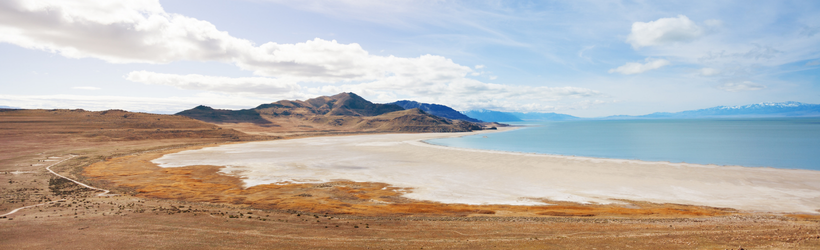
The good news is that we’re not powerless. Great Salt Lake can recover if we act decisively. Record snowpack in 2022-23 temporarily raised water levels by 5 feet, demonstrating that the lake can respond to increased water flow. But temporary reprieves aren’t enough—we need sustained action.
This means:
- Water conservation at every level—agricultural, industrial, and residential
- Policy changes that prioritize water flow to the lake
- Continued monitoring of air quality and dust exposure
- Support for affected communities, especially those facing disproportionate impacts
- Public education about the lake’s vital role in community health
The science is clear: preserving Great Salt Lake isn’t about choosing between people and nature. It’s about recognizing that human communities and the natural environment are inseparably linked. A healthy lake means healthy people, sustainable economies, and thriving communities.
Conclusion
The Board of the Utah Population & Environment Council understands the connection between population sustainability and environmental health. Great Salt Lake is the perfect illustration of this truth. We cannot sustain a healthy population on the Wasatch Front without a healthy lake.
The question before us isn’t whether we can afford to save Great Salt Lake—it’s whether we can afford not to. Every dust storm reminds us that the clock is ticking. Every scientific study reinforces the same conclusion: the health of our lake and the health of our communities are one and the same.
The Great Salt Lake has sustained life in Utah for millennia. Now it’s our turn to sustain the lake—because in doing so, we sustain ourselves, our children, and the future of all who call Utah home.
The Utah Population & Environment Council (UPEC) advocates for sustainable communities through the preservation of our environment. Learn more at utahpopulation.org
Sources:
- Sierra Club, “Why the Shrinking Great Salt Lake Is a Public Health Crisis”
- U.S. Geological Survey, “Dust from the Great Salt Lake dry lakebed: a possible health risk”
- Grineski et al., “Harmful dust from drying lakes,” One Earth, 2024
- University of Utah research on economic impacts of Great Salt Lake dust
- Utah Division of Water Resources, Great Salt Lake Information
- Think Global Health, “Shrinking Shores, Rising Risks in the Great Salt Lake”
Images in this post were created using Canva.
UPEC at the Save The Great Salt Lake Rally on January, 2026
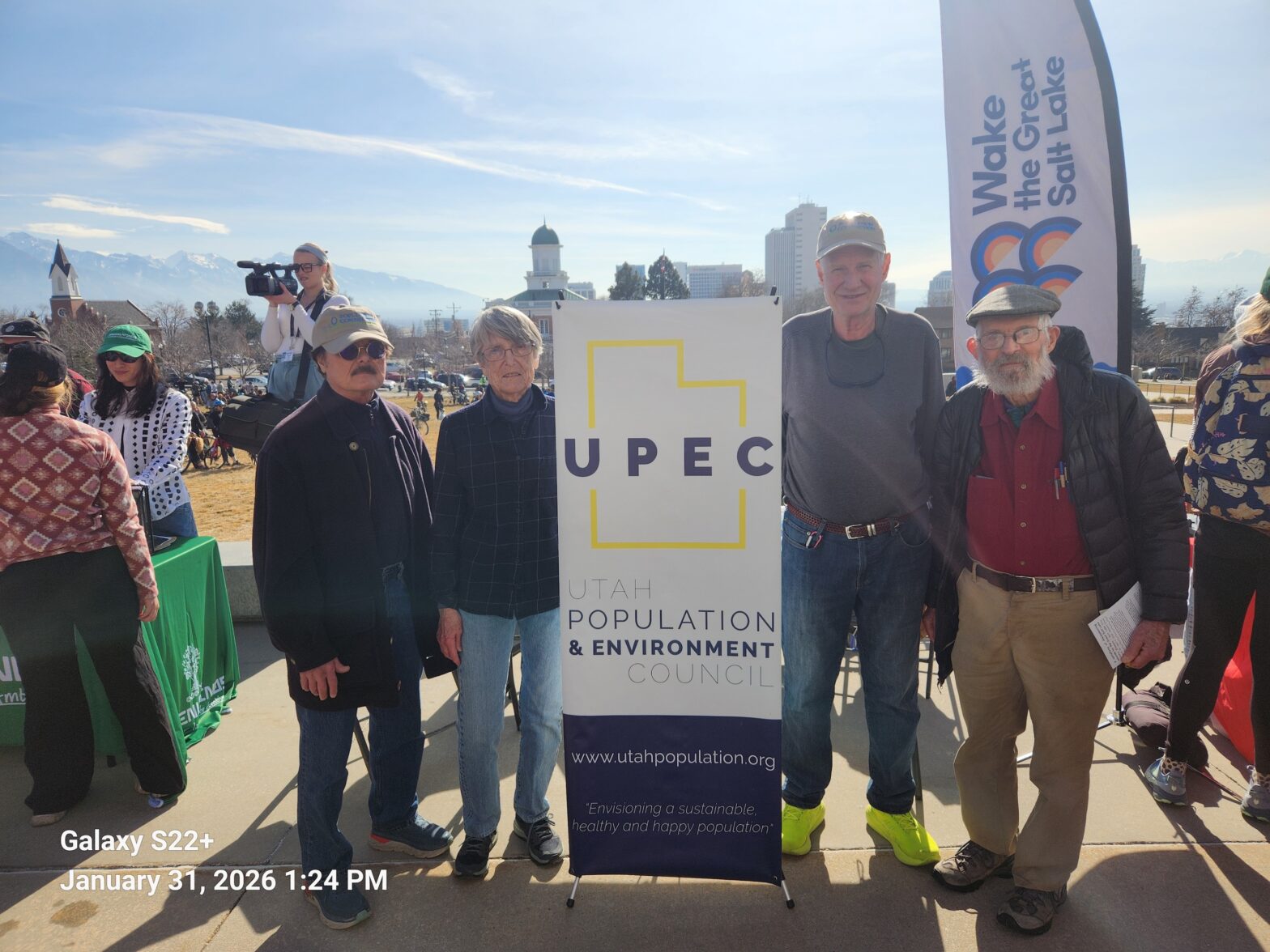
We were proud to join the Save the Great Salt Lake rally again this January — and we’ll keep showing up for this cause.
At the Utah Population & Environment Council (UPEC), protecting our environment and preserving our Earth isn’t just a priority — it’s core to who we are. The Great Salt Lake is a vital part of Utah’s ecosystem, economy, and identity. Its continued shrinking is not just an environmental concern; it’s an existential one for Salt Lake City and the surrounding communities.
We made our voices heard alongside our board members (left to right): Gary Hanneman, Ann O’Connell, Gray Griffin, and Doug Stark — thank you for being there.
And to everyone who stopped by our table for a conversation: thank you. These exchanges remind us why this work matters. The more we learn, the clearer it becomes — population and environment are deeply interconnected. We cannot protect one without caring for the other.
Stay tuned for a follow-up blog entry showing the direct relationship between saving the Great Salt Lake and having a healthy and sustainable population in the Salt Lake Valley and the great state of Utah.
✨ Our Interconnectedness ✨

A few years ago, I was introduced to a term from quantum physicist, David Bohm, called the “holomovement.” He coined the word to describe a dynamic and unbroken totality that underlies all of reality.
I often think of that unbroken reality at the quantum level when I see it at play in the waves of our social fabric. Quotes like these below also illustrate our interconnectedness:
“Humankind has not woven the web of life. We are but one thread within it. Whatever we do to the web, we do to ourselves.”
―Chief Seattle
“Whatever affects one directly, affects all indirectly.”
―Dr. Rev. Martin Luther King, Jr.
“To harm nature is to harm yourself. To care for it is to care not just for yourself, but for the entire universe.”
―Michael Bassey Johnson
“You see, in this magical tapestry, threads of myself are intrinsically woven within the seams of all else. I cannot help but marvel at the complexity of these interconnections.”
―Lavinia Busch
“Every piece of you holds the whole—not as poetry, but as fact.”
―David Maze
These quotes show the intrinsic understanding of quantum physics: everything is connected to everything else. There is no such thing as separation. Literally, our lives depend on how well we treat this glorious Earth and each other.
It is with this deep interconnectedness in mind that we ask for your financial support of UPEC – the only organization in Utah working at the intersection of population and our environment.
As 2025 draws to a close, please make a donation, of any size, to support the work of UPEC. All gifts matter. All contributions make a difference. Donate online here!
Your financial support helps us maintain our website. In the last 90 days, 1400 people visited UPEC’s website. This demonstrates that the website’s content of research and blogs are meaningful to people in Utah and beyond. And in 2026, your donation will help us host a Speakers Series that will be focused on the dynamic relationship between population and the environment.
Now and in the coming year, please hold tight to each other. Be generous with your love and affection. Find ways to take better care of the Earth. And express gratitude daily for the spectacular planet that carries us through the Milky Way at 500,000 mph.
With love and appreciation for my quantum connection to each of you,
Susan Soleil
UPEC Board Chair
To donate by Check:
Mail to:
Gray Griffin
2591 Green Oaks Dr
Bountiful, UT 840102
or…
Giving Thanks
In the US, this week is a set aside for giving thanks. And the Board of Utah Population & Environment Council (UPEC) has lots to be grateful for in 2025.

Thanks to Xmission for hosting our website! This free service from Xmission is a gift to Utah in general and to nonprofits specifically. Thanks for being a generous host.
Thanks to Felipe Zurita for creating our new website! Please check it out HERE. And share the link with others who care about our human population living in harmony with all of nature.
Thanks to the long-standing UPEC Board Members who have cared about and carried UPEC for years and years! Gratitude for your dedication and tenacity.
Thanks to the Quaker Earthcare Witness group in Laguna Beach, CA. They selected UPEC to receive a $500 donation this past summer. Thanks for the contribution and for supporting other causes you care about.
Please consider donating to UPEC as 2025 closes out. UPEC is the only nonprofit in Utah researching and highlighting how population affects all other parts of our environment. Financial gifts of any size make a difference. Below are two ways to donate. Thank you!
Last, please talk about the impact of our human population on other species over the holidays with friends and family. We need more voices in private homes, public spaces, and on social media talking about how uncontrolled growth of all kinds is negatively impacting our beautiful planet.
UPEC Board Members send you wishes for a transformative New Year! May we find viable and scalable solutions for our poly-crises.
In peace and with love,
Susan Soleil
Board Chair
To donate by Check:
Mail to:
Gray Griffin
2591 Green Oaks Dr
Bountiful, UT 840102
or
UPCOMING PRESENTATION: Solutions Through Reproductive Health — Why Health and Education Matter to Climate Change

With Hannah Evans from Population Connection
Solutions Through Reproductive Health — Why Health and Education Matter to Climate Change With Hannah Evans, Senior Analyst at Population Connection
Date: Monday, October 27
Time: 7:00–8:00 PM MDT
Location: Online via Zoom. Register Here.
Join the Utah Population & Environment Council for an inspiring and solution-oriented conversation with Hannah Evans from Population Connection, the largest grassroots population organization in the United States!
About the Presentation
In Solutions Through Reproductive Health, Hannah will explore how improving access to healthcare, education, and women’s empowerment are key to addressing climate change and global sustainability challenges. By examining the root causes of high fertility and the interconnections between poverty, resource use, and environmental pressures, Hannah offers a holistic perspective on how population dynamics shape the future of both people and planet.
Register for the Zoom event here »
About Hannah Evans
Hannah Evans is a Senior Analyst at Population Connection, where she focuses on the intersections of population, health, human rights, and climate change. Her work investigates how population dynamics interact with global social, political, and environmental systems, emphasizing integrated solutions that promote equity and sustainability.
She develops open-source educational resources, collaborates with international NGOs, and gives comprehensive presentations on the connections between population growth, women’s empowerment, and climate adaptation.
Before joining Population Connection, Hannah taught Women’s Studies courses on gender, science, and feminist theory and worked in sustainable agriculture and public health programs across Latin America. She holds a BA in Environmental Policy and Political Science and a Master’s in Political Ecology from San Diego State University.
About Population Connection
Founded in 1968 (formerly Zero Population Growth), Population Connection is the nation’s leading grassroots population organization, working at the intersection of demography, health, human rights, and sustainable development. With over 40,000 members and hundreds of thousands of supporters, Population Connection advocates for a sustainable future through education, advocacy, and action.
Learn more: populationconnection.org/about-us
Register to Attend
Don’t miss this opportunity to learn how improving health and education worldwide can create lasting solutions to climate change.
Register for the Zoom event here »
Global Collapse of Coupling and Fertility

Worldwide, coupling and fertility rates are declining. The Utah
Population and Environment Council generally applauds the
developments regarding decreased fertility rates. Especially since the
world population is projected to climb from over the current eight
billion to about ten billion by 2060.
One person who has done valuable research on coupling and fertility
rates is Alice Evans, Demographer and Senior Lecturer at Kings College,
London. A good summary of her work can be found in her Jan. 13, 2025
Substack Article: The Global Collapse of Coupling & Fertility.
This article is densely packed with relevant information, including
changes in coupling and fertility rates across various countries as well
as showing important divergences among countries. Just one example
from the article, “From the 1960s, US fertility fell primarily due to fewer
births among couples. In that context, baby bonuses might raise fertility.
But today, the major contributing factor is the decline of coupling.”
One of the most intriguing considerations regarding decreases in
coupling rates is her assertion that “The ‘relationship recession’
coincides with the rise in smart phones.”
What if smart phones are one of the major contributors to decreasing
coupling relations and fertility rates? Use of smart phones is increasing
dramatically. If there is a strong correlation between smart phone use
and decreased relationships, how could you decrease the smart phone
use on a to increase relationships? Also worthy of consideration – in
countries where cell phone use is low for women, would fertility rates
decline if women in those countries had greater usage of cell phones?
Take some time to consider the Substack article by Alice Evans. It
provides valued information and raises major questions about coupling
and fertility rates.